Ethics and morals relate to “right” and “wrong” conduct. While they are sometimes used interchangeably, they are different: ethics refer to rules provided by an external source, e.g., codes of conduct in workplaces or principles in religions.
Morals refer to an individual’s own principles regarding right and wrong. Source: diffen.com
The Victorian era is often thought of as a time when society and its rules were rigid and strict. The term prudish is used very much in reference to this point in time. So if one has to define Victorian morality, it is based upon a group of principles or standard of moral conduct including practising sexual restraint, zero acceptance of criminal activity and a stern demeanour.
Table of Contents
Facts about Victorian attitudes and values: an introduction
Victorian era is thus named after the monarch ruling over England during this period and this particular term was employed for the first time when the Great Exhibition of 1851 took place in London. This was the platform where all that Victorian morality and inventions and discoveries were showcased to the world at large.
What are examples of Victorian morality?
The term Victorian morality is often used to describe the values of the period, which included
- sexual proprietary
- hard work
- honesty
- thrift
- sense of duty and responsibility towards the less well off
Religion, morality, elitist thinking, industrialization all played an important role in the formation of what we today know as the Victorian era morality. It changed England totally by altering the very thread of social interaction, mores and traditions.
Victorian morality in America
In line with the values, Royal Navy patrolled the Atlantic ocean checking on ships for any illegal trade of slaves. If found, slaves were freed. Freed slaves were sent to Sierra Leone. Trivia: Sierra Leone’s capital was named as “Freetown”.
Victorian era morality & values in literature
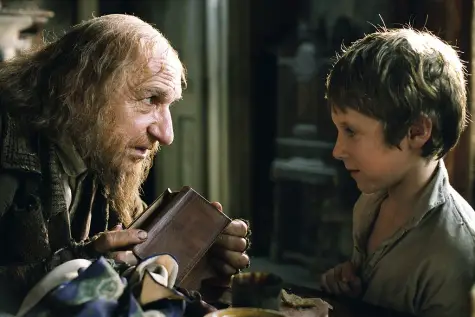
As mentioned earlier, movements for justice, freedom, and other strong moral values were pitted against greed, exploitation, and cynicism. The writings of Charles Dickens, in particular, observed and raised awareness about these conditions. It is also said that Karl Marx and Friedrich Engels’ analysis of capitalism is in and as a reaction to Victorian Britain.
These patriarchal social values and roles for men & women are summed up by Alfred Lord Tennyson‘s (1809–1892) in his poem, The Princess (1847):
Man for the field and woman for the hearth;
for the sword, and for the needle she;
Man with the head, and women with the heart;
Man to command, and woman to obey;
All else is confusion.
Questions and Answers about Victorian Moral Code of Conduct
Here are some Q&A
Contradictions in the Victorian Values / moral code
Today, the historians view this period in history as a contradiction in terms. On one hand, there was utmost abeyance to the dictates of society, exemplified behaviour and formality. On the other hand, child labor and prostitution were highly prevalent at the same time.
Thus, a façade of sobriety, sternness and piety was adopted while turning a blind eye to the many evils that were rampant in Victorian England. Religion, which was constant and unshakeable, was beginning to be questioned. The people did not hesitate to ask why.
The advent of industrialization, modernization and the mushrooming of factories, developments in science and the discovery of various continents left a lingering doubt in the minds of people. Commercialism took precedence over everything else.
Hence, the virtues prescribed by religion were named as values, i.e. a morality based conduct and behaviour. Values, not prescribed by the church, were changeable and alterable according to practice and people’s wishes.
Ideals were upheld as morals and values. The agnostic way of thinking emerged due to the tremendous and rapid transformation of the country’s economy, development and political situation. The Oxford movement, anti-liberal movement, utilitarianism and Marxism came into power unlike anything before.
Thus, the belief that value means utility basis of thought came into being. Nietzsche propounded the theory of nihilism meaning the ultimate emptying of culture and meaninglessness.
The most thought were given to what was respectable. From the aristocracy to the working class, respectability was the topmost thing on everyone’s minds. Being clean, truthful, and polite and observing the rules of conversation was very important. Philanthropy was also an example of Victorian morality.
Victorian ethics is another interesting subject to look at. Also read about Victorian code of conduct.
Anyone not adhering to the morals during the Victorian era was shunned and criticized. Women, especially, were the unwitting victims of this trend for the longest time.