Fashion of Victorian Era comprises the various fashions and trends in British culture that emerged and grew in province throughout the reign of Queen Victoria, a period which lasted from June 1837 to January 1901.
Imperial palaces, a beautiful countryside, lavish balls and genteel women wearing rich fabrics are the first things that come to the mind when you think of this era. Evening gowns, or ball gowns as they are popularly known, were made famous by the women of upper societies, usually worn at parties or balls.
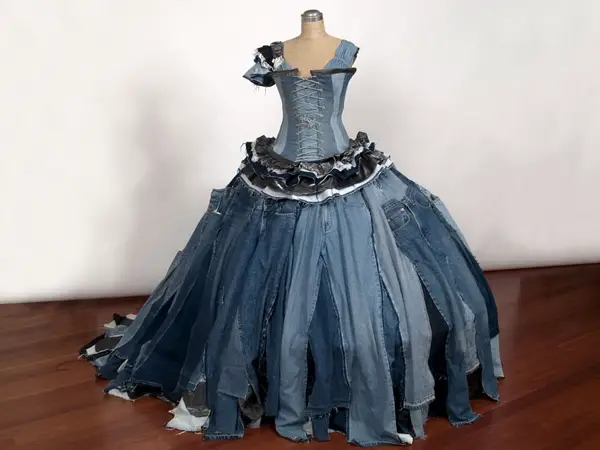
During the early Victorian Era, gowns had narrow and sloping shoulders, low and pointed waists, and bell-shaped skirts. Corsets, a knee-length chemise, and layers of flounced petticoats were worn under the gowns.
These gowns had a very low neckline and were worn off the shoulder with opera-length gloves. The cashmere shawl was also a prominent feature of Victorian fashion. It was particularly noticed in 1840. By then, the shawl was used as wrap over the dresses. Women wore heavy fabrics, such as satins and silks, which expressed the status of the person in the society.
The bell shape soon became dome shaped. In the 1860s, the skirts became flatter at the front and projected out more behind the woman. As these skirts became bigger and flared out, they also needed support from the inside.
The chemise and petticoats were replaced by pantalettes and the crinoline as the size of the skirts expanded. The lower portion was also supported by horsehair, which were woven into the pattern for the stiffened look. Ball gowns, now, had low necklines and short sleeves, and were worn with short gloves or fingerless lace or crocheted mitts.
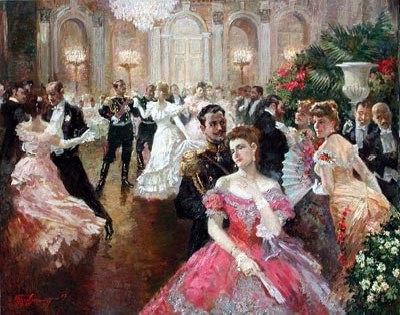
The Victorian gowns were almost always made in two colours. Vivid colours such as deep red, peacock blue, bright apple green, royal blue, purple, mandarin, sea green were used alone or in combination. Evening gowns were in softer hues and extravagantly trimmed in contrast fabrics and very dcollet (delicate).
By late1870s, dome styles were replaced by Princess sheath garments, without a waist seam, with bodice and skirt cut in one. By 1878 the cuirasse bodices had reached the thighs.
The cuirasse bodice is like a corset and dipped even deeper both front and back extending well down the hips creating the look of a body encased in armors. The silhouette was slim and elongated even more by the train. Trains were very heavily ornamented with frills, pleats, ruffles, braids and fringing. No bustle was needed for the cuirasse bodice or Princess sheath dress.
In 1880s crinoline busters were replaced by Langtry bustles. The new Langtry bustle had springs that folded up as the lady sat down. It was even said to have sprung back to its normal position when the lady rose once again. It had minimal drapery and a slimmer, more fitted, severely tailored princess bodice, with a much flatter front. Langtry bustle gave the correct foundation for the wider skirts. These bustles can be considered to be a typical feature of Victorian fashion.
Slowly these huge ballooned Victorian skirts gave way to the hobble skirts. Hobble skirts brought into fashion narrow skirts, wherein knee length corsets were combined with the entire ensemble. Hobble skirts often restricted movement. These slim skirts created a problem for women in the comfort factor yet they gained popularity with time.