Victorian Era is known for the vast developments that took place changing the political and economic structure of England. Abolitionism means a movement to end slavery.
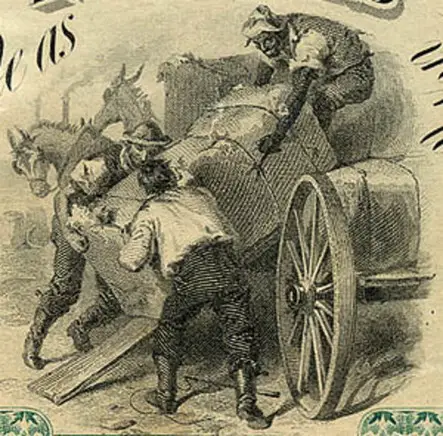
Slave trade
It was a movement launched in European and American countries which gained momentum to put an end to the practice of slavery and free all those who were used as bonded laborers. Slavery was a very profitable trade carried on in the European countries since the late 15th century. Spain was the first country to enact laws prohibiting slave trade in the 16th century.
Slaves in Britain were boarded in ships which left from the west coast ports and this activity was largely operated from coastal areas like Liverpool and Bristol. These ships were loaded with firearms, gunpowder, metals, alcohol, knives, etc and were presented to the African tribal chief in exchange for slaves. On their way back to England, the slaves were regularly chained down to restrict their movement.
Abolition efforts
A Committee for the Abolition of the Slave Trade was formed in 1787 in respect of the Atlantic slave trade. William Wilberforce played an important role in the cause of abolition of the slavery. By the mid 18th century British ships brought in as many as 50,000 slaves in a year. These slaves were forced to work in coffee plantations or were used in the production of goods like cotton, tobacco, sugarcane, etc.
In England, the very first Society for Effecting the Abolition of the Slave Trade was established in 1787 and John Barton, Joseph Hooper, John Lloyd and others were its members. In Britain, the slave trade was prohibited by the virtue of Slave Trade Act of 1807. Under this Act, a fine of 100 per slave was imposed if British captains were found importing slaves.
Despite all the care being taken to stop this malpractice, it continued. The Royal Navy had established the West Africa Squadron in 1808 and its job was to curb the Atlantic slave trade by keeping a vigilant eye on the West African coast.
After the enforcement of the 1807 Act slaves were still held within the confines of the British Empire but their trade had stopped. In 1823 Anti-Society was formed and its members were William Wilberforce, Joseph Sturge, Thomas Clarkson and others. In 1839 an organization by the name of British and Foreign Anti-Slavery Society was established.
Abolitionist movement
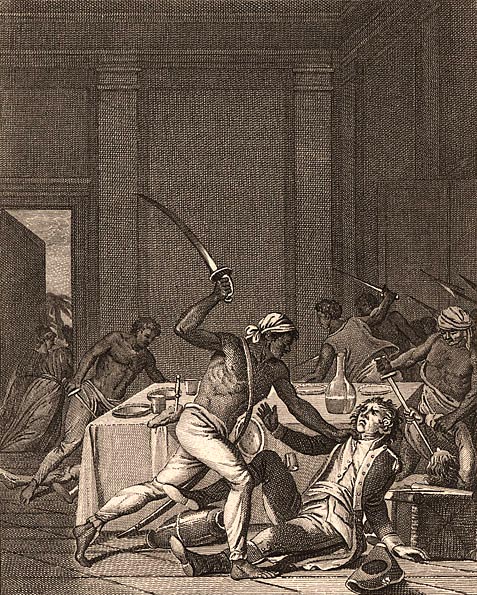
The abolitionist movement gained momentum in the 1820s and a revolt was launched against the institution of slavery. The Christmas rebellion of 1831 led by Sam Sharpe extended further support for the cause of abolition. At the time of Christmas holiday of 1831, there was an outbreak of revolt by the slaves in Jamaica which was popularly known as the Baptist War.
The rebels were however repressed by the military of the Jamaican plutocracy with the help of British garrison within ten days from the launch of revolt. However, in this large-scale mutiny, there was a loss of both property and human life which required immediate investigation. The outcome of these inquiries played a major role in the formulation of the Slavery Act of 1833.
In 1834, after the enforcement of the Act of 1833 slaves were released and an agreement was entered into by Britain with the former owners of the slaves. This treaty consisted of two parts; first was that there would be an apprenticeship system which would be terminated in 1838 and the final apprenticeships were to get over after six years, that is, in 1840.
By the virtue of the Slavery Act, slavery was officially abolished. However, only those slaves were released who were below the age of six years while the others worked as apprentices. The Act of 1833 also provided for the right of compensation for the slave owners who were too loose their property.
The compensation money sanctioned by the British government under this Act was 20 million. A significant part of the abolition was that Black people took active participation in the abolition campaign and one such name is of Olaudah Equiano. Also, check out information about Thomas Nast and Hannah More.