Victorian-Era.org

 Information about Victorian Era England Life


Late Victorian Society

The Victorian Era gets its name from Queen Victoria who ruled England from 1837 to 1901. During this long reign of 63 years, many changes were brought about in England. Victorian Era is known for the vast developments that took place changing the political and economic structure of England.

One such change was the Industrial Revolution owing to which there were numerous changes in the lives of the Victorian people. The late Victorian Society deals with change in the social sturcture, change in the status of women and the political changes that affected the lives of the commoners.

The Upper Class:

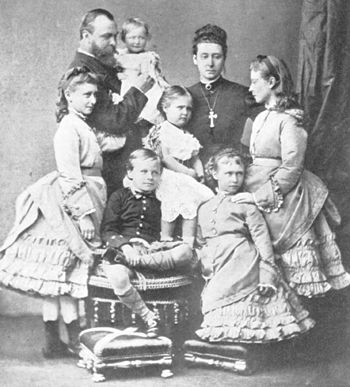
The traditional Victorian Upper Class consisted of the Aristocrats, Nobles, Dukes, Viscounts and other wealthy families working in the Victorian courts. A distingiushing factor of the Upper Class was that the nature of their work was such that it held them in a powerful position giving authority, better living conditions and other facilities.

late-victorian-society

The hereditary families belonging to aristocrats by the early 19th century had taken a keen interest in industial sector. Due to the changing nature of the basic standard of living of the people, the traditional aristocratic class was now slowing disappearing and instead a new combination of nobles and the steadily growing wealthy class comprised of the Upper section of the society.

The Upper Class was by inheritance a Royal Class. Many Aristocrats did not work as other classes to make a living because for centuries together their families had been gathering enough money for each generation to live a luxurious life. However, there were number of aristocrats who managed large industries like mining or shipping, etc.

In terms of education also those belonging to the rich families got the best tutors to provide education. The fact that they represented the royal class gave these people an advantage at everything. They could buy expensive clothes imported from Europe, or afford other richies of life that was beyond the scope of others.

Middle Class:

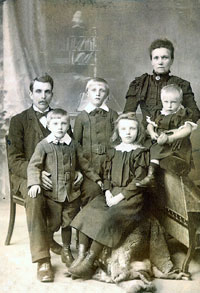
In the Victorian times, people belonging to the middle class were more in number. Middle class was the next in social ranking as many of them only lacked a title of being a duke or other royals. The Victorian period was very prosperous for the middle class. Most of the professionals like doctors or teachers comprised of the middle class.

late-victorian-society

Middle class people also owned and managed vast business empires and were very rich. At times, the rich were equated with the middle class if they had nothing to promote their royalty and richness. Thus, those having their own businesses were regarded as rich and wealthy.

The middle class population at the very start of the Victorian era was limited to a few. The Industrial Revolution in the mid-century of the era brought about drastic changes in the standard of living of the Victorian Middle Class people. This revolution opened the doors for more job opportunities and earn a decent living.

This in turn had a positive impact on the education of children. Thus, overall, the middle class was prospering by grabing every change which they got to improve their status.

The Lower/ Working Class:

The lowest among the social hierarchy were those who belonged to this section of the society. The working class remained aloof to the political progress of the country and were hostile to the other two classes.The Industrial Revolution created a lot of problems for the working class. This working class was further categorised as the skilled workers and the unskilled workers.


Due to the revolution, the industrial workers got jobs thus improving their living conditions. However, the unskilled workers who were placed below the skilled ones remained umemployed and were vulnerable to the expliotation. After years of working in the industial sector, the skilled workers became very powerful to form their Trade Unions.

There is no doubt that the working class was the worst affected class in the Victorian times. Lack of money resulted in negligible food supply. For some working families the living conditions were so pathetic that they required their children to work in order to bring home some extra home to survive.

The death of their father meant that there is no income to the family and they eventually were forced to live on streets or some public housing. There were some families which would reside in a single room just to have a shelyer over their head. The conditions were so brutal for the working class that at times children were forced to work away from their parents.

All these conditions had a negative impact on their lives. Many of them lost out opportunity to get education and better their living status as their entire life right from the age of five or six years was spent on working in a factory. They thus ended up doing dangerous and dirty jobs. Another class that existed was the paupers. They were ranked below the working class since they lived in abject poverty.

Change in the condition of status of the Victorian Women:

Industrial Revolution attributed to the change in the status of women. According to the traditional family pattern, the women were supposed to look after the household chores and take care of children while the men would earn money. There was a strong presence of male dominance in the society.

Women were to obey what men told them to do. The revolution gave women an opportunity to work and earn money, thus changing the old beliefs. Working women not only shared the burden of earning money but it also gave them a sense of security. There lives were no longer restricted to the house and children. The segregation of large families into nuclear ones also added to the change in the womens lives.

Politics:

The English government under the rule of Queen Victoria was a monarchy which also comprised of a Parliament. The Parliament was a Bicameral legislature which consisted of The House of Lords and The House of Commons. The said houses would meet separately and passed a bill as law by majority votes. However, for the bill to pass, it was necessary that both the houses accent to it.

The members of the House of Lords not elected by public voting and a Lord Chancellor was appointed to supervise its activities. On the other hand, the members of the House of Commons were elected by public voting. In the initial years of the Victorian period, there were two strong political parties, The Whigs and the Tories (Conservatives). These were the first political parties in England who dominated the political field throughtout the Victorian reign.

The Whigs were in favor of growth of the Parliament and wanted to restrict the royal power. Towards the end of 1850, the Whigs became Liberals. They were of the opinion that Parliament should take the decisions and all men should have a right to vote and elect members. In 1858, Lord Palmerston, the Prime Minister of England resigned from his post after the Orsini plot against Napolean III, the French emperor fell out.

Tories, the other dominant party was in favor of monarchy. Many rich officials belonging to high posts were members of this party. Their view about voting was exactly opposite to that of the Whigs. Tories believed that only those men who were rich and owned large plots of land should have the right to vote. The Reform Acts were enacted three times in 1832, 1867 and 1884.


Victorian Era Etiquettes Victorian Family Victorian Fashion
Victorian Furniture Victorian Government Victorian History
Victorian Era Life Victorian Music Victorian People
Victorian Schools Victorian Society Victorian Sports
Victorian Style Bedrooms Victorian Style Bird Cages Victorian Style Design
Victorian Era Style Victorian Toys Victorian Trading
Victorian Food Victorian Houses Victorian Poor And Middle Class
Victorian Style Architecture Victorian Style Houses Victorian Women
Late Victorian Society Victorian Era Corsets Victorian Era Social Classes
Victorian Era Facts
Victorian Era Child Labor Apparels Of Victorian Era
Victorian Era Abolition Of Slavery Victorian Era Abortion Victorian Era Abstinence
Victorian Era Accent English Victorian Era Activities Victorian Era Actors
Victorian Era America Victorian Era Amusement Parks Victorian Era Anime
Victorian Era Apprentices Victorian Era Artists Victorian Era Based Movies
Victorian Era Characteristics Victorian Era Medicines Victorian Era Burlesque
Victorian Era Dolls And Doll Houses New Essays / Articles on Victorian Era  

This website offers free information on Life in England during Victorian Era. There were plenty of interesting facts to life during Victorian Period. We have information on Society during Victorian Times, Architecture, Art, Paintings, History, Costumes, Women, Furniture, Food and many such things. Victorian age is considered very important in England's and indeed world's history.
Custom Search