The feminist movement (also known as the Women’s Movement, Women’s Liberation or Women’s Lib) refers to a series of campaigns for reforms on issues such as reproductive rights, domestic violence, maternity leave, equal pay, voting rights, sexual harassment, and sexual violence.
The movement’s history has gone through three waves, beginning in the late 18th century up to the 20th century.
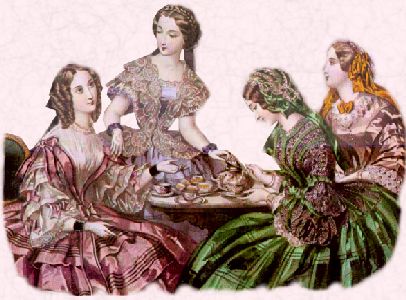
The reign of Queen Victoria, from 1837 to 1901, marked the period known in history as the Victorian era. Victorian woman’s role was in the home, as domesticity and motherhood were considered by society to be sufficient for the emotional fulfilment of females.
The women ran the household, bore the children and were nurses, mothers, wives, neighbors, friends and teachers but they had no standing in the society.
Writer Virginia Woolf, associated with the ideas of the first wave of feminism, in her book A Room of One’s Own, described how men socially and psychically dominate women. She argued that “women are simultaneously victims of themselves as well as victims of men and are upholders of society by acting as mirrors to men”.
She recognized the social constricts that restrict women in society and used literature to contextualize it for other women.
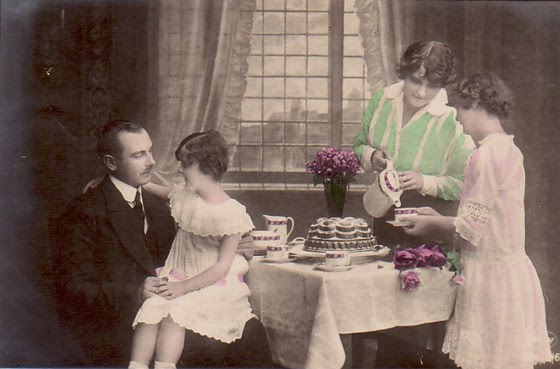
Activists such as Emmeline Pankhurst attempted to show that British women needed more than domestic servility. The stereotype of the Victorian gentle lady became unacceptable and even intolerable. The suffrage movement was mainly women from upper or middle-class backgrounds.
These women were frustrated by their social and economic situation and sought an outlet through which to initiate change. The first wave originated in the Langham Place Circle in the 1850s, lead by Barbara Bodichon (ne Leigh-Smith) and Bessie Rayner Parkes. They campaigned for improved female rights in the law, employment, education, and marriage.
Their struggles for change within society, along with the work of such advocates for women’s rights as John Stuart Mill, were enough to spearhead a movement that would encompass mass groups of women fighting for suffrage. Mill had first brought the idea of women’s suffrage up in the platform he presented to British electors in 1865. He would later be joined by numerous men and women fighting for the same cause.
New Zealand was the first self-governing country in the world to grant women the vote. In 1893, all women over the age of 21 were permitted to vote in parliamentary elections. In Britain, the Suffragettes campaigned for the women’s vote, which was eventually granted – to some women in 1918 and to all in 1928 – as much because of the part played by British women during the First World War, as of the efforts of the Suffragists.
In the United States leaders of this movement included Elizabeth Cady Stanton and Susan B. Anthony, who each campaigned for the abolition of slavery prior to championing women’s right to vote. Other important leaders include Lucy Stone, Olympia Brown and Helen Pitts. American first-wave feminism involved a wide range of women, some belonging to conservative Christian groups (such as Frances Willard and the Woman’s Christian Temperance Union).
In the United States, first-wave feminism is considered to have ended with the passage of the Nineteenth Amendment to the United States Constitution (1919) granting women the right to vote.
The feminist movement has brought a sweeping variety of social and cultural change, its impact touching familial relations, religion, the place of women in society, gendered language, and relationships between men and women.