— Please note that the images used on the page are for study purpose only. Due to the nature of the subject, it may be inappropriate for children. If you are below the age of 18, please do not proceed further —
Female hysteria was once a common medical diagnosis, made exclusively in women. The history of the notion of hysteria can be traced to ancient times. Galen, a prominent physician from the second century, wrote that hysteria was a disease caused by deprivation in particularly passionate women: hysteria was quite often in virgins, nuns, widows and, rarely, in married women.
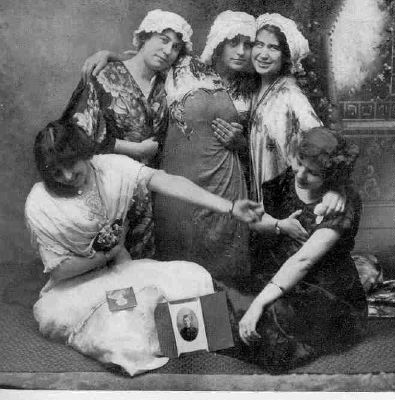
Treatment for Female Hysteria
The prescription to this disease in was intercourse. As a last resort, in the case of virgins or nuns, women considered to be suffering from hysteria would sometimes undergo “pelvic massage” manual stimulation of the genitals by the doctor until the patient experienced “hysterical paroxysm“.
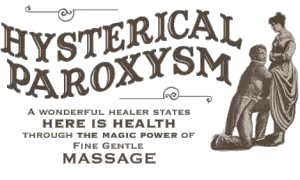
Hysteria is widely discussed in the medical literature of the Victorian era. In 1859, a physician claimed that a quarter of all women suffered from hysteria. He cataloged possible symptoms, which included faintness, nervousness, insomnia, fluid retention, heaviness in abdomen, muscle spasm, shortness of breath, irritability, loss of appetite for food or sex, and “a tendency to cause trouble.
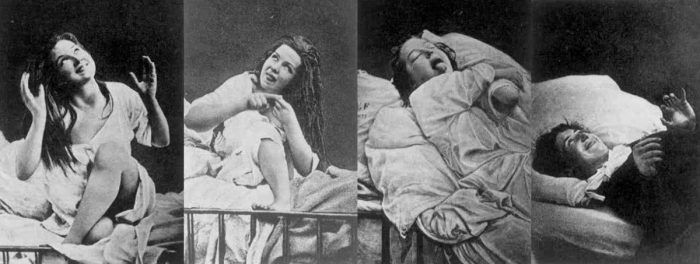
With so many possible symptoms, hysteria was always a natural diagnosis when the ailment could not be identified. For instance, before the introduction of Electroencephalography (EEG), epilepsy was frequently confused with hysteria.
Physicians thought that the stresses associated with modern life caused women to be more susceptible to nervous disorders and to develop faulty reproductive tracts. The major problem with hysteria was its treatment; the physicians did not enjoy the tedious task of ‘pelvic massage’ as the technique was difficult to master and it could take hours to achieve “hysterical paroxysm.”
Devices used to treat hysteria
As a solution to these problems, various massage devices were invented, which shortened treatment from hours to minutes, increasing a physician’s treatment capacity. At the beginning of the 19th century, hydrotherapy devices were available and by the mid-19th century, they were popular at many high-profile bathing resorts across Europe and in America.
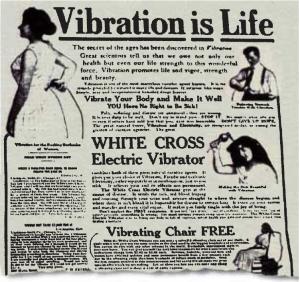
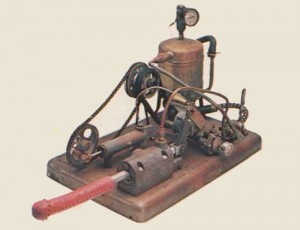
By 1870, a clockwork-driven vibrator was available for physicians. In 1873, the first electromechanical vibrator was used at an asylum in France for the treatment of hysteria. While physicians of the period acknowledged that the disorder stemmed from sexual dissatisfaction, they seemed unaware of and unwilling to admit the sexual purposes of the devices used to treat it.
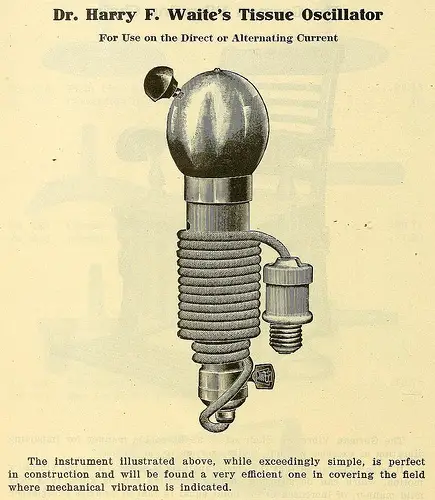
By the 20th century, the spread of electricity brought the vibrator to the consumer market. Hysteria could now be treated cheaply and easily in the privacy of one’s own home. Other cures for female hysteria included bed rest, bland food, seclusion, refraining from mentally taxing tasks (like reading) and sensory deprivation.
Over the course of the early 20th century, the number of patients of female hysteria sharply declined, and today it is no longer a recognized illness. There were many reasons for its decline. Firstly, hysteria was a natural diagnosis if the physician could not understand the disease. With advancement in science and medicine, this was no longer the case.
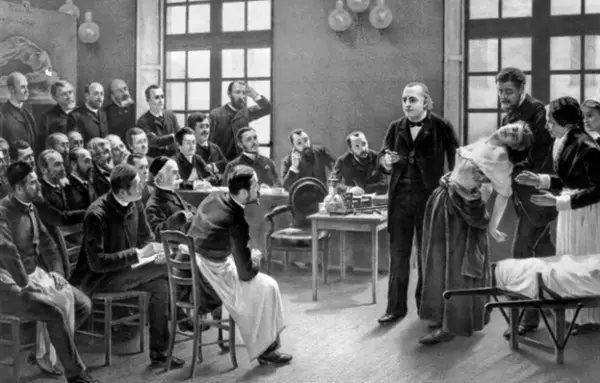
Secondly, many medical authors claim that the common man has gained a greater understanding of the psychology behind disorders such as hysteria, and it therefore no longer gets the desired response from society. Many cases that would have been labeled hysteria were re-classified by Sigmund Freud as anxiety neuroses. Today manifestations of hysteria are recognized in other ailments such as schizophrenia, conversion disorders, and anxiety attacks.
Also see: Feminism During Victorian Era, Sexual repression and Fainting Couch in Victorian Era.