Victorian-Era.org

  Information about Victorian Era England Life


Astronomy During Victorian Era

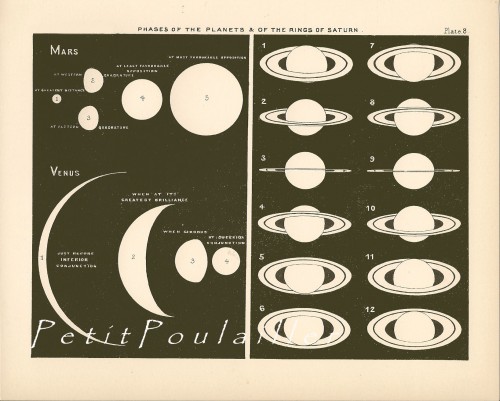
Victorian era was a period of infancy of science and technology. But unlike the mainland Europe, astronomy in Victorian Britain was not funded by the government. Instead, it was the domain of wealthy amateurs. These amateurs were responsible for founding of learned societies, commissioning telescopes and building observatories. Not much is recorded about these amateur societies, though it is accepted that new telescope technologies and further observations provided for one of the major theories in astronomy, The Nebular Hypothesis.

This was the name coined by William Whewell in his Bridgewater Treatise. Whewell was inspired by the theory of the Origins of the Solar System by Pierre-Simon Laplace in his System of the World (1796) and the observations of William Herschel that nebulae might be new nascent solar systems. The hypothesis was that the apparent swirling patterns observed in the heavens were composed of gas or dust condensing into a star. Debris at the outer edges of the nebula would become planets.

The nebular hypothesis was made widely famous in two popular works, the first inspiring the latter. Both use the 'nebular hypothesis' as the backdrop for a theory of cosmic evolution. The first was Views of the Architecture of the Heavens (1837), published by John Pringle Nichol(1804-59), a professor of astronomy at Glasgow.

This was followed seven years later, Vestiges of the Natural History of Creation (1844) published anonymously by Robert Chambers (1802-71). He used the nebular hypothesis as the backdrop for his theory of cosmic development or evolution. For Chambers, all of nature is the unfolding of deep natural laws that prescribe the evolution of the heavens, the creation of the earth and the evolution of life.

All this progresses from swirling clouds of dust that first form solar systems and then finally organic life. This theory made the idea of God created the Earth in Seven Days redundant. As a result, Chambers' theories were attacked by the Church.

George Biddell Airy (1801-92) was an Astronomer Royal at the Royal Observatory in Greenwich from 1835 to 1881. He transformed it, installing advanced astronomical equipment and expanding staff. He propagated the idea of clocking in (and out) of observers and astronomers, just as in factory. Further reforms by Airy helped to increase efficiency and reduce human error in observations.
Victorian Era Etiquettes Victorian Family Victorian Fashion
Victorian Furniture Victorian Government Victorian History
Victorian Era Life Victorian Music Victorian People
Victorian Schools Victorian Society Victorian Sports
Victorian Style Bedrooms Victorian Style Bird Cages Victorian Style Design
Victorian Era Style Victorian Toys Victorian Trading
Victorian Food Victorian Houses Victorian Poor And Middle Class
Victorian Style Architecture Victorian Style Houses Victorian Women
Late Victorian Society Victorian Era Corsets Victorian Era Social Classes
Victorian Era Facts
Victorian Era Child Labor Apparels Of Victorian Era
Victorian Era Abolition Of Slavery Victorian Era Abortion Victorian Era Abstinence
Victorian Era Accent English Victorian Era Activities Victorian Era Actors
Victorian Era America Victorian Era Amusement Parks Victorian Era Anime
Victorian Era Apprentices Victorian Era Artists Victorian Era Based Movies
Victorian Era Characteristics Victorian Era Medicines Victorian Era Burlesque
Victorian Era Dolls And Doll Houses New Essays / Articles on Victorian Era  

This website offers free information on Life in England during Victorian Era. There were plenty of interesting facts to life during Victorian Period. We have information on Society during Victorian Times, Architecture, Art, Paintings, History, Costumes, Women, Furniture, Food and many such things. Victorian age is considered very important in England's and indeed world's history.
Custom Search